


Gingivitis!! If you aren’t sure how to pronounce the word let alone what it means look no further….. we demystify the word and the condition.
Pronounced “jin-juh-vahy-tis” according to dictionary.com - It originates from the Latin noun “gingival” meaning gum and “itis” meaning inflammation of the gums.
So what is it?!
Dr Batavia explains “Gingivitis is superficial inflammation of the gums. If you see blood when brushing and flossing then this is usually the first sign of such inflammation”.
Some of you may recall an advert on television featuring a lady whose eyes are bleeding while she applies eye make-up, the statement made was that we wouldn’t accept bleeding from any other part of our face so why do so many people continue to ignore this problem in their mouths!
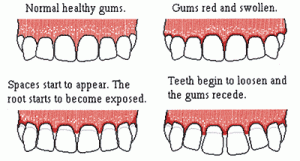
What causes Gingivitis and how?
Gingivitis is caused by accumulation of tartar. Tartar is formed by plaque solidifying as a deposit on the teeth. Deposits near the gum line start to irritate the gum. The gums try to protect themselves by pushing a lot of blood to the area to combat the damage from the toxins caused by the bacteria in the tartar. This results in the inflammation!
What is plaque? Plaque is a soft, sticky film that builds up on your teeth and contains millions of bacteria. The bacteria in plaque cause tooth decay and gum disease if they are not removed regularly through brushing and flossing.
What is tartar? Unlike plaque, which is a colourless film of bacteria, tartar is a mineral build-up that's fairly easy to see if above the gumline. The most common sign of tartar is a yellow or brown colour to teeth or gums. The only way for sure to detect tartar — and to remove it — is to see your dentist.
What do you experience if you have gingivitis?
There’s no nice way to say this…. your gums bleed and you probably experience a bad taste in the mouth!
It can inhibit you socially, as well as limit you from being able to enjoy certain foods.
Other possible causes for Gingivitis…
Gingivitis is sometimes associated with hormonal changes such as puberty or pregnancy. Or it can be caused by mouth breathing, which leads to a dry mouth. Various medications, such as for epilepsy which also cause dry mouth can contribute to gingivitis. Lastly as with most gum problems it seems that there is also a greater risk if someone has diabetes.
What are the Solutions!!
• Brushing, flossing and using interdental brushes prevent tartar forming, and hence prevent gingivitis.
• Secondly, have an assessment with a dentist or hygienist, and follow through with the appropriate care and treatment recommended
• Thirdly, only professional tools can remove hardened tartar from teeth so regular visits to the dentist and hygienist are essential!
Dr Batavia says “ I find the best results are achieved by motivating my patients to carry out a regular oral hygiene routine – one that works for them – the right one for them – everyone is different so its important to find out what is right for each person”.
Dr Batavia adds “I also ask them to notice and log the benefits they observe them happening, this motivates them even more to do this regularly”.
Where does this slippery slope lead to?!
If not dealt with in a timely fashion – 10-15% problems become deeper and eventually result in periodontitis. This means that the supporting structure of the tooth - bone and gums – has become affected. The tooth is anchored in the bone and as the bone is eroded, the tooth becomes wobbly and can fall out.
Why be limited when eating and drinking? Why suffer soreness in gums and loose teeth?
People often feel embarrassed seeking advice and treatment. However being fit and healthy is something you can aim for, just like any other part of your body so that you can enjoy everything!
This is one of the most preventable dental conditions so take action daily to halt gum disease in its tracks! With the right oral hygiene routine, you can enjoy whatever you want to eat or drink without bad taste or bleeding gums or embarrassment.
Dr Batavia has been able to help patients with some remarkable results, he says “the following example proves that once someone decides to take action, a lot can be achieved”.
“A patient was very nervous about seeking help, she felt embarrassed, would not brush thoroughly or floss because of the bleeding, so it became a vicious cycle.
She started to notice that in addition to the bleeding and sore gums, several teeth wobbled. This caused her even more embarrassment socially, and along with the poor odour she felt very self-conscious when smiling.
After her first assessment she came in for a course of few visits. We deep cleaned with the use of local anaesthetic. She herself noticed a difference within 2 weeks! The bleeding stopped quite quickly and her gums were not so sore or inflamed. The poor breath was much improved and she was subsequently able to look after her teeth herself, and experience even more improvements.