


Dental decay is a common problem across the UK, with almost 80% of adults showing visible signs of it.
It’s also an increasingly common problem among our nation’s children, according to a 2022 survey, with 1 in 5 children displaying classic symptoms such as tooth pain and sensitivity.
Luckily, there are several treatments available that can help prevent tooth decay, with fissure sealants being just one of them.
Fissure sealants are protective plastic coatings that are applied to the chewing surfaces of the back teeth – most commonly the molars and premolars – to stop food and bacteria from getting trapped in the grooves and prevent early tooth decay and cavities.
In this blog, our expert dentists at Ravenscourt Dental Practice explore everything you need to know about fissure sealants in London, from the different types to whether they’re really necessary for preventing dental decay in children, teens, and adults.
What is a pit and fissure sealant?
A pit and fissure sealant is a thin, clear or opaque plastic coating that is applied to the pits and fissures (depressions and grooves that form on the chewing surfaces of the teeth), to create a physical barrier that stops food particles and bacteria from getting lodged into these spaces.
They’re most commonly applied to the top of the molars, aka the chewing teeth at the back of the mouth, to reduce the amount of debris and bacteria that sticks to the teeth – making them much easier to clean, and preventing tooth decay and cavities.
Types of fissure sealants
There are several different types of pit and fissure sealants that dentists use to help prevent tooth decay, including:
- Resin-based sealants – These are the preferred type of sealants, and the first option explored by dentists for preventing tooth decay.
- Glass ionomer sealants – These sealants contain fluoride that can help prevent tooth decay over time, and they can be used as a temporary option when resin-based sealants can’t be applied.
Self-bonding sealants – These types of fissure sealants eliminate the need for etching and bonding, simplifying and speeding up the application process. However, they may not adhere as strongly to the teeth as other types.

How long do fissure sealants last?
On average, fissure sealants can last anywhere between 3-10 years, with their exact lifespan depending on the material they’re made from and how well they’re taken care of.
Typically, resin-based fissure sealants tend to last the longest, but of course, adequate care (this involves maintaining a good oral hygiene routine, sticking to a healthy diet, and avoiding hard and chewy foods as much as possible) and regular checkups are required to ensure longevity and effectiveness.
To maintain excellent oral health, make sure to brush (or encourage children to brush) at least twice a day, using a soft-bristled toothbrush or an electric alternative, and fluoride toothpaste to further protect your teeth. You should also floss at least once a day, ideally at night to remove food particles, plaque, and bacteria build-up from between your teeth.

Do fissure sealants hurt?
Not at all!
The fissure sealant application process isn’t painful at all, and shouldn’t require any numbing.
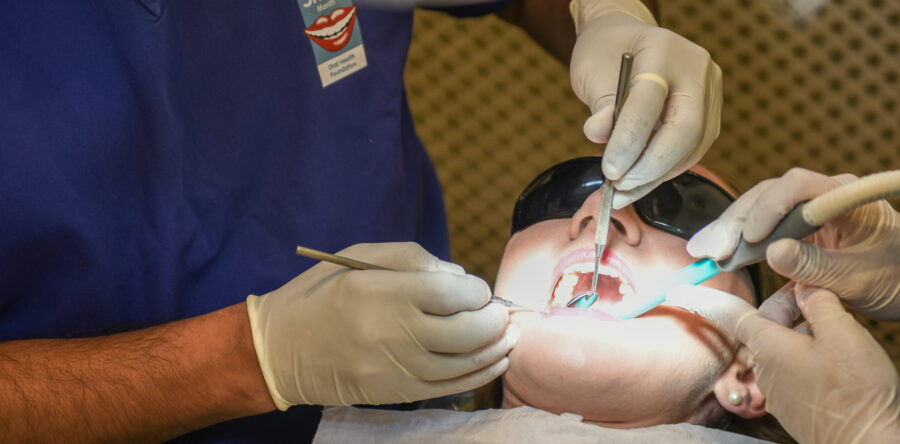
During the procedure, the teeth are cleaned to remove any build-ups of plaque and food debris, dried, and prepped with a special acid solution, before the sealant is bonded to the tooth’s surface and hardened with a dental curing light to set the sealant in place.
Once the dentist checks the bite and removes any excess sealant, they will provide all the at-home aftercare instructions you need to take care of your fissure sealant and send you on your way.
Yes, it really is that simple!
Are fissure sealants safe?
In the past, some patients have raised concerns over the safety of fissure sealants and the materials used to make them – particularly Bisphenol (BPA).
BPA is a hazardous chemical that can, in large quantities, cause adverse health effects, like obesity, fertility problems, and type 2 diabetes.
However, the amount of BPA present in fissure sealant materials is very low, and highly unlikely to cause any of these or other related conditions.
In fact, they’re widely regarded as one of the safest, most effective ways of protecting your teeth from decay and cavities – so much so, that studies show they prevent 80% of cavities among children, teens, and adults.
So, it’s safe to say that the benefits far outweigh the potential dangers, when it comes to fissure sealants.
Are fissure sealants necessary?
Fissure sealants aren’t always necessary for patients suffering from dental decay, and dentists may simply recommend making tweaks to their oral hygiene routine and prescribe a high-fluoride toothpaste for extra protection.
However, for patients who are more at risk of tooth decay, or who have suffered previously from deep dental decay, the treatment comes highly recommended to prevent further, more painful issues from cropping up in future.
Need more expert advice?
Here at Ravenscourt Dental, we’ve been helping our patients prevent tooth decay with fissure sealants in London for decades, and have all the skills, tools, and expertise to help you (and the rest of the family!) achieve happy, healthy smiles.
To find out more about the fissure sealant treatment and how you could benefit from it, or to book a consultation, give our reception team call today on 020 8748 4023 or email us at [email protected] and we’ll get back to you as soon as we can!