


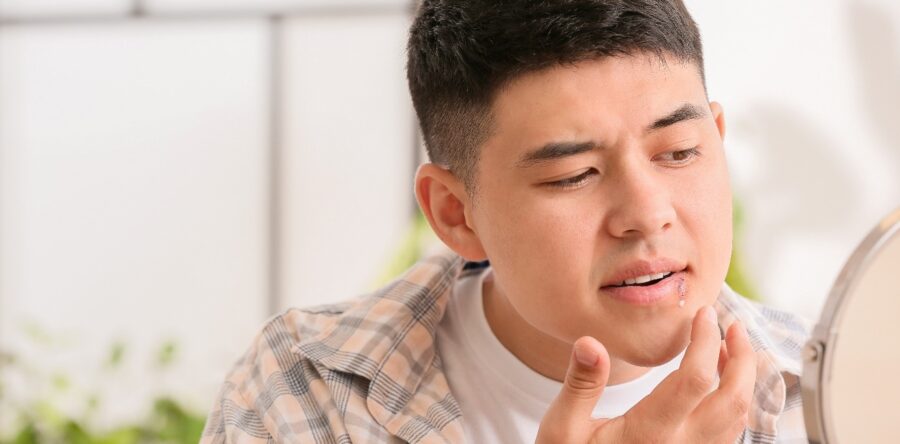
Canker sores or, as they're more commonly known, mouth ulcers are small, shallow lesions that can develop in several places of your mouth – including on the soft tissue and at the base of your gums.
They're a pretty common issue, especially among teens and young adults, and can be bothersome.
Not only do they cause varying severities of pain and discomfort, but they also make everyday activities – like eating and talking – incredibly difficult too.
If you've had cold sores before, then you'll know how painful and embarrassing they can be.
These small, red, fluid-filled blisters that form around the mouth are a common occurrence for many and can appear for a multitude of different reasons.
But can dental treatment trigger cold sores?
In this post, our experts at Ravenscourt Dental Practice walk you through the potential causes of cold sores, and why you may be experiencing cold sores after a trip to the dentist.
What causes cold sores?
Cold sores - often referred to as fever blisters - are caused by the herpes simplex virus (HSV-1).
Not to be confused with the dreaded genital herpes, HSV-1 outbreaks are often triggered by extreme temperatures, a cold or other respiratory illnesses, a weak immune system and even stress.
Most people will get HSV-1 during early childhood, and it's transmitted through saliva or skin-to-skin contact, making it a highly contagious virus.
After you initially catch the virus, it doesn't go away. It lies dormant in your body and is then triggered by a range of different things - including certain dental treatments.

Can you get a cold sore from the dentist?
Whilst dental work itself won't give you cold sores, it may trigger the virus and cause some people to develop cold sores.
Certain dental treatments can cause stress and trauma to the lips, causing HSV-1 to reactivate and any wounds or irritation to become infected.
If you've never had a cold sore before, then it's possible (but highly unlikely!) that you've picked up the virus from the dental practice.
How can I tell if I have cold sores?
Not everyone who catches the herpes simplex virus presents symptoms, and if you do, they will depend on whether you are newly infected or if you've had the virus for some time already.
Some signs and symptoms that may develop include:
- An itching, tingling or burning sensation in the mouth, followed by painful mouth ulcers that form on the tongue, lips, gums or throat
- A sore throat or pain when swallowing
- Swollen lymph nodes
- A fever
- Aches and pains
- Recurrent headaches
- Nausea

Can I still attend my dental appointment with a cold sore?
If you have active cold sores, some dentists prefer to see you after they have cleared. So, if you have an appointment coming up soon and you've developed cold sores, give your dentist as much notice as possible, and they'll be sure to let you know whether or not you need to reschedule.
Some dentists, however, will still allow you to visit the practice, but may warn against it as undergoing treatment can be uncomfortable when you've got an active sore - but this is entirely up to you, so use your best judgement.
Any urgent dental treatment will still go ahead. And, if you need emergency dental treatment, you shouldn't put off calling your dentist until your cold sores have cleared.
How are cold sores treated?
Cold sores generally clear up on their own within 1-2 weeks, but your pharmacist can prescribe antiviral medication to speed up the healing process.
There are also plenty of home remedies you can use to help you feel better, including:
- Cold, damp compresses
- Over-the-counter pain medication - like paracetamol or ibuprofen
- Lip balms - like Carmex, Aquaphor or Vaseline - to moisturise the affected area

Is there a way you can prevent cold sores?
Cold sores can form at any time when you have the HSV-1 virus, but luckily, there are some things you can do to reduce your risk of a breakout.
First, and most importantly, you should get plenty of rest, as a lack of sleep weakens your immune system, making flare-ups more likely.
Sunlight of any degree can trigger an outbreak, so it’s important you also wear a lip balm that contains SPF to reduce the likelihood of a cold sore from developing. Make sure to talk with your doctor about taking antiviral medicines if you find you're getting cold sores too often.
To stop the virus from spreading, you should avoid:
- Touching cold sores, and wash your hands with soap and water immediately if you do
- Sharing utensils, drinking glasses, lip products, and razors
- Kissing anyone.
Need more advice?
Here at Ravencourt Dental Practice, we understand how painful and inconvenient cold sores can be.
During your appointment with our team, we'll do everything we can to prevent irritation to your lips so the virus and the subsequent symptoms aren’t triggered.
If you're concerned about coming in for treatment, our team are always on hand and would be more than happy to answer any of your questions.
Give us a call today on 020 8748 4023 or email us at [email protected] and we'll get back to you as soon as we can!